The Power of Compassion: Buddhist Monks’ Walk for Peace Concluded in Washington
Estimated reading time: 6 minutes
Key Takeaways:
- Completed a historic 2,300-mile pilgrimage from Texas to Washington D.C. over 108 days.
- Led by 24 Vietnamese Theravada monks focusing on “gentle witness” rather than political rhetoric.
- Utilized digital platforms to reach millions, creating a new model for modern peace activism.
- Symbolized by the presence of Aloka, a companion dog who walked the entire distance.
Table of Contents
- The Journey of 2,300 Miles
- A Viral Phenomenon: Digital Mindfulness
- Navigating Challenges and Controversies
- The Social and Market Impact
- The Future of the Peace Movement
- Practical Takeaways for Daily Life
- Frequently Asked Questions
In an era defined by rapid-fire digital communication and deep-seated political polarization, it is rare to see a movement that captures the collective heart of a nation through the simple, ancient act of walking. On February 10, 2026, a momentous journey reached its crescendo as the Buddhist Monks’ Walk for Peace concluded in Washington, D.C.
This was not just a local event; it was a 2,300-mile pilgrimage that spanned 108 days and traversed more than ten states, beginning in the heart of Texas and ending at the steps of our nation’s capital. Undertaken by 24 Vietnamese Theravada monks from the Hương Đạo Vipassana Bhavana Center in Fort Worth, the walk has become a global symbol of non-ideological witness and a testament to the enduring power of compassion.
The Journey of 2,300 Miles: How the Buddhist Monks’ Walk for Peace Concluded in Washington
The pilgrimage began on October 26, 2025, at the Hương Đạo Vipassana Bhavana Center in Fort Worth, Texas. Led by the visionary Bhikkhu Paññakāra, a group of 24 monks set out with a singular mission: to promote peace and mindfulness during a time of significant social and political division.
For 15 weeks, these monks maintained a grueling daily pace of over 20 miles. They walked through sun, wind, and the unpredictable winter weather of the American South and Mid-Atlantic. Their path was not just a physical one but a spiritual demonstration of “gentle witness.” By the time the walk concluded, they had transformed from a small group of practitioners into a global phenomenon.
Key Details of the Pilgrimage
- Total Distance: 2,300 miles.
- Duration: 108 days (15 weeks).
- Participants: 24 Vietnamese Theravada monks.
- The Companion: Aloka, a dog who accompanied the monks, becoming a symbol of loyalty.
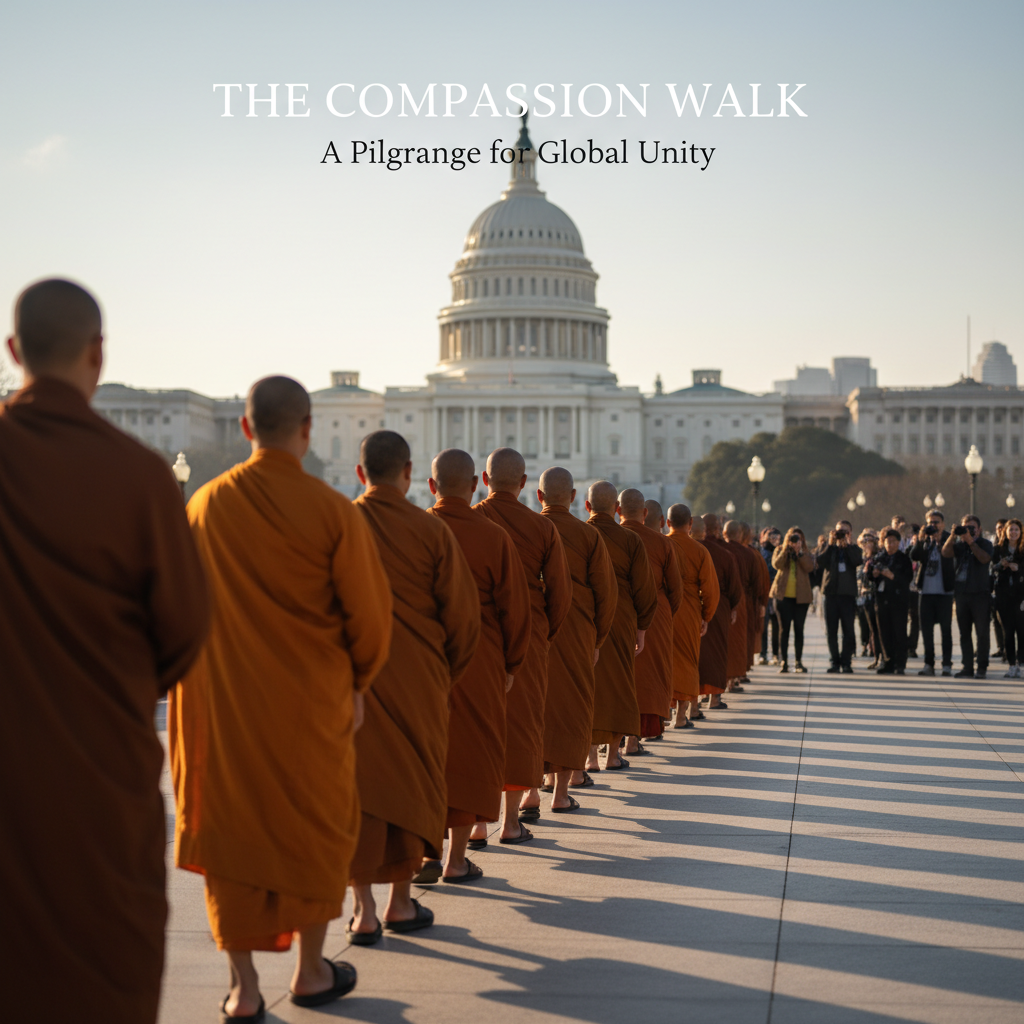
According to research findings and live coverage by major outlets like the Associated Press, the arrival in Washington D.C. was met by thousands of onlookers. For many, the sight of the saffron-robed monks against the backdrop of the U.S. Capitol served as a stark, calming contrast to the typical rhetoric of the city.
A Viral Phenomenon: The Digital Reach of Mindfulness
One of the most remarkable aspects of this walk was its digital footprint. In a world where social media is often criticized for fueling division, the Walk for Peace used these platforms to unite. The event garnered millions of online followers who tracked the monks’ progress daily.
The use of live streams and social media updates allowed people from all over the world to participate in the journey virtually. This wasn’t just a “fad”; it was a masterclass in how traditional spiritual practices can leverage modern technology to achieve a massive scale. The data demonstrates that there is a significant market and social demand for content that focuses on mindfulness, nonviolence, and unity.
“Rather than shouting to be heard, the monks walked to be seen.”
Navigating Challenges and Controversies
No journey of 2,300 miles is without its hurdles. The monks faced significant logistical strains, including the physical toll on their bodies and the challenge of securing food and shelter while maintaining their monastic vows. While the reception was overwhelmingly positive, some minor critiques surfaced regarding the return journey.
On platforms like Wikipedia, some observers questioned if a motorized return journey by bus was less “pure” than the walking pilgrimage itself. However, most experts agree that the completion of the 108-day walk achieved its spiritual and symbolic goals regardless of the return logistics. Additionally, the monks ensured the welfare of Aloka, the dog who walked with them, demonstrating their commitment to compassion through the care of their four-legged companion.
The Social and Market Impact: A Long-Term Shift in Peace Activism
The conclusion of this walk marks what many believe to be a structural shift in how we approach peace activism. This approach has resonated deeply with demographics seeking nonviolent responses to political polarization.
Impact on Spirituality and Peace Sectors
The event has already begun to affect the “spirituality and peace activism” sectors. We are seeing a growth in digital mindfulness engagement, with millions looking for ways to incorporate “gentle witness” into their own lives. The Hương Đạo Vipassana Bhavana Center has positioned itself as a leader in this movement, proving that ancient traditions can provide modern solutions to modern anxieties.
Looking Ahead: The Future of the Peace Movement
The journey didn’t end on the steps of the Lincoln Memorial. The monks have a packed schedule for the remainder of 2026, starting with a massive homecoming celebration.
- February 14, 2026: A 6-mile homecoming walk and peace gathering is scheduled in Fort Worth, Texas.
- Global Meditation Events: Plans are underway to expand the walk’s message through synchronized meditation gatherings over the next 6–12 months.
This sustained online momentum indicates that this is a long-term movement. It builds on the deep-rooted Buddhist tradition of pilgrimage while utilizing the “viral mechanics” of the 21st century to ensure the message reaches every corner of the globe.
Practical Takeaways: Bringing the “Walk for Peace” Into Your Life
While most of us cannot walk 2,300 miles, we can incorporate the lessons of the monks into our daily routines:
1. Practice “Gentle Witness”: In your next disagreement, try to be a witness rather than a combatant. Listen more than you speak.
2. Commit to a “Daily Pace”: Focus on small, manageable actions daily to promote peace, such as a five-minute meditation.
3. Embrace Non-Ideological Compassion: True compassion does not have a prerequisite. Look for ways to help others that transcend political boundaries.
4. Leverage Your Digital Footprint: Use your platform to share moments of beauty and resilience rather than inflammatory “hot takes.”
Conclusion: A New Chapter for Peace
The Buddhist Monks’ Walk for Peace concluded in Washington, but the ripple effects are just beginning. By walking 2,300 miles through the heart of America, Bhikkhu Paññakāra and his fellow monks reminded us that peace is a proactive, physical, and spiritual choice that must be made every single day.
As they return to the Hương Đạo Vipassana Bhavana Center for their homecoming, the rest of us are left with a question: How will we carry the torch of peace in our own communities?
Frequently Asked Questions
Who organized the Walk for Peace?
The walk was organized by the Hương Đạo Vipassana Bhavana Center in Fort Worth, Texas, and led by Bhikkhu Paññakāra.
How many miles did the monks walk daily?
The 24 monks maintained a grueling daily pace of over 20 miles for 108 consecutive days.
Who is Aloka?
Aloka is a dog who accompanied the monks for the entire 2,300-mile journey, becoming a symbol of loyalty and universal peace.
What is the next event for the monks?
A 6-mile homecoming walk and peace gathering is scheduled for February 14, 2026, in Fort Worth, Texas.
Was the walk a political protest?
No, the monks described their journey as a “gentle witness,” aiming to transcend political and ideological labels to promote universal mindfulness.