Blog

  • Buddhist Monks’ Walk for Peace Concludes in Washington

    Buddhist Monks’ Walk for Peace Concludes in Washington

    The Power of Compassion: Buddhist Monks’ Walk for Peace Concluded in Washington

    Estimated reading time: 6 minutes

    Key Takeaways:

    • Completed a historic 2,300-mile pilgrimage from Texas to Washington D.C. over 108 days.
    • Led by 24 Vietnamese Theravada monks focusing on “gentle witness” rather than political rhetoric.
    • Utilized digital platforms to reach millions, creating a new model for modern peace activism.
    • Symbolized by the presence of Aloka, a companion dog who walked the entire distance.

    Table of Contents

    In an era defined by rapid-fire digital communication and deep-seated political polarization, it is rare to see a movement that captures the collective heart of a nation through the simple, ancient act of walking. On February 10, 2026, a momentous journey reached its crescendo as the Buddhist Monks’ Walk for Peace concluded in Washington, D.C.

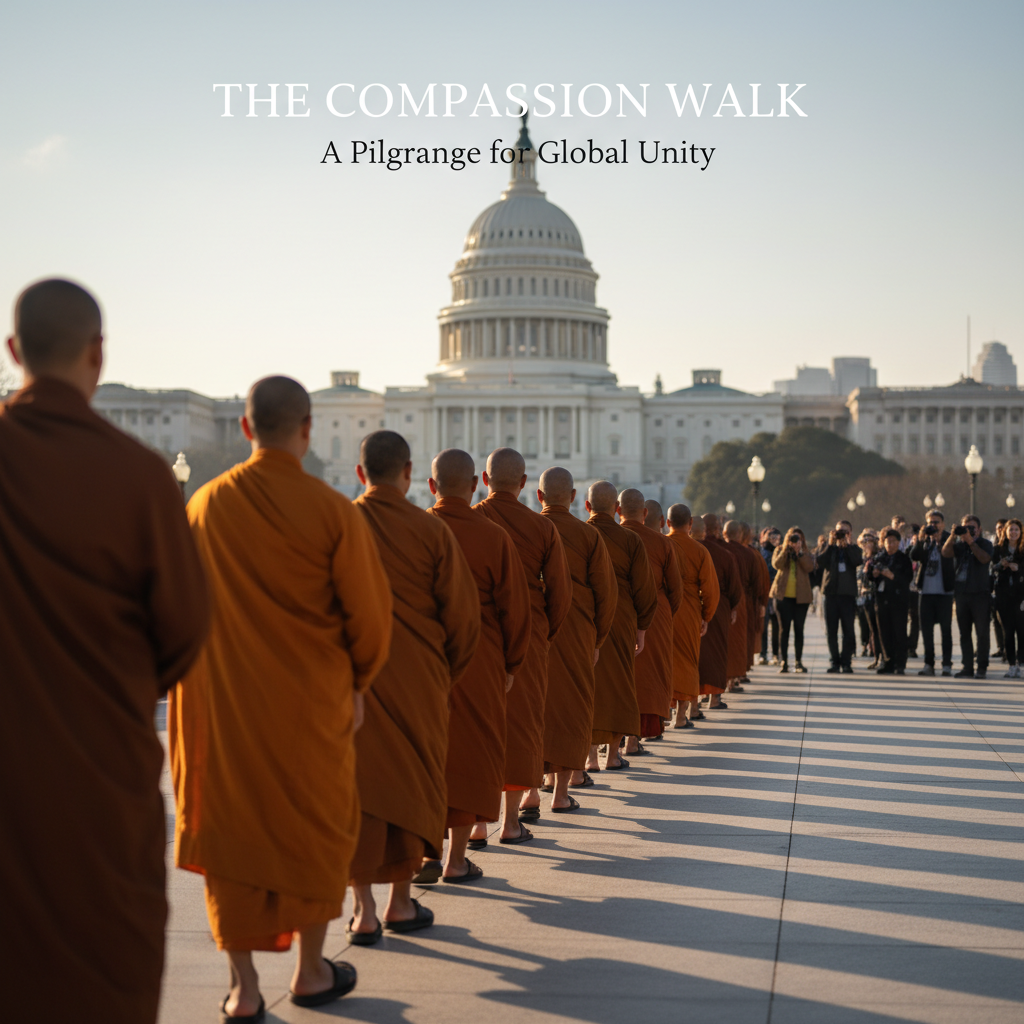
    This was not just a local event; it was a 2,300-mile pilgrimage that spanned 108 days and traversed more than ten states, beginning in the heart of Texas and ending at the steps of our nation’s capital. Undertaken by 24 Vietnamese Theravada monks from the Hương Đạo Vipassana Bhavana Center in Fort Worth, the walk has become a global symbol of non-ideological witness and a testament to the enduring power of compassion.

    The Journey of 2,300 Miles: How the Buddhist Monks’ Walk for Peace Concluded in Washington

    The pilgrimage began on October 26, 2025, at the Hương Đạo Vipassana Bhavana Center in Fort Worth, Texas. Led by the visionary Bhikkhu Paññakāra, a group of 24 monks set out with a singular mission: to promote peace and mindfulness during a time of significant social and political division.

    For 15 weeks, these monks maintained a grueling daily pace of over 20 miles. They walked through sun, wind, and the unpredictable winter weather of the American South and Mid-Atlantic. Their path was not just a physical one but a spiritual demonstration of “gentle witness.” By the time the walk concluded, they had transformed from a small group of practitioners into a global phenomenon.

    Key Details of the Pilgrimage

    • Total Distance: 2,300 miles.
    • Duration: 108 days (15 weeks).
    • Participants: 24 Vietnamese Theravada monks.
    • The Companion: Aloka, a dog who accompanied the monks, becoming a symbol of loyalty.

    According to research findings and live coverage by major outlets like the Associated Press, the arrival in Washington D.C. was met by thousands of onlookers. For many, the sight of the saffron-robed monks against the backdrop of the U.S. Capitol served as a stark, calming contrast to the typical rhetoric of the city.

    A Viral Phenomenon: The Digital Reach of Mindfulness

    One of the most remarkable aspects of this walk was its digital footprint. In a world where social media is often criticized for fueling division, the Walk for Peace used these platforms to unite. The event garnered millions of online followers who tracked the monks’ progress daily.

    The use of live streams and social media updates allowed people from all over the world to participate in the journey virtually. This wasn’t just a “fad”; it was a masterclass in how traditional spiritual practices can leverage modern technology to achieve a massive scale. The data demonstrates that there is a significant market and social demand for content that focuses on mindfulness, nonviolence, and unity.

    “Rather than shouting to be heard, the monks walked to be seen.”

    Navigating Challenges and Controversies

    No journey of 2,300 miles is without its hurdles. The monks faced significant logistical strains, including the physical toll on their bodies and the challenge of securing food and shelter while maintaining their monastic vows. While the reception was overwhelmingly positive, some minor critiques surfaced regarding the return journey.

    On platforms like Wikipedia, some observers questioned if a motorized return journey by bus was less “pure” than the walking pilgrimage itself. However, most experts agree that the completion of the 108-day walk achieved its spiritual and symbolic goals regardless of the return logistics. Additionally, the monks ensured the welfare of Aloka, the dog who walked with them, demonstrating their commitment to compassion through the care of their four-legged companion.

    The Social and Market Impact: A Long-Term Shift in Peace Activism

    The conclusion of this walk marks what many believe to be a structural shift in how we approach peace activism. This approach has resonated deeply with demographics seeking nonviolent responses to political polarization.

    Impact on Spirituality and Peace Sectors

    The event has already begun to affect the “spirituality and peace activism” sectors. We are seeing a growth in digital mindfulness engagement, with millions looking for ways to incorporate “gentle witness” into their own lives. The Hương Đạo Vipassana Bhavana Center has positioned itself as a leader in this movement, proving that ancient traditions can provide modern solutions to modern anxieties.

    Looking Ahead: The Future of the Peace Movement

    The journey didn’t end on the steps of the Lincoln Memorial. The monks have a packed schedule for the remainder of 2026, starting with a massive homecoming celebration.

    • February 14, 2026: A 6-mile homecoming walk and peace gathering is scheduled in Fort Worth, Texas.
    • Global Meditation Events: Plans are underway to expand the walk’s message through synchronized meditation gatherings over the next 6–12 months.

    This sustained online momentum indicates that this is a long-term movement. It builds on the deep-rooted Buddhist tradition of pilgrimage while utilizing the “viral mechanics” of the 21st century to ensure the message reaches every corner of the globe.

    Practical Takeaways: Bringing the “Walk for Peace” Into Your Life

    While most of us cannot walk 2,300 miles, we can incorporate the lessons of the monks into our daily routines:

    1. Practice “Gentle Witness”: In your next disagreement, try to be a witness rather than a combatant. Listen more than you speak.

    2. Commit to a “Daily Pace”: Focus on small, manageable actions daily to promote peace, such as a five-minute meditation.

    3. Embrace Non-Ideological Compassion: True compassion does not have a prerequisite. Look for ways to help others that transcend political boundaries.

    4. Leverage Your Digital Footprint: Use your platform to share moments of beauty and resilience rather than inflammatory “hot takes.”

    Conclusion: A New Chapter for Peace

    The Buddhist Monks’ Walk for Peace concluded in Washington, but the ripple effects are just beginning. By walking 2,300 miles through the heart of America, Bhikkhu Paññakāra and his fellow monks reminded us that peace is a proactive, physical, and spiritual choice that must be made every single day.

    As they return to the Hương Đạo Vipassana Bhavana Center for their homecoming, the rest of us are left with a question: How will we carry the torch of peace in our own communities?

    Frequently Asked Questions

    Who organized the Walk for Peace?
    The walk was organized by the Hương Đạo Vipassana Bhavana Center in Fort Worth, Texas, and led by Bhikkhu Paññakāra.

    How many miles did the monks walk daily?
    The 24 monks maintained a grueling daily pace of over 20 miles for 108 consecutive days.

    Who is Aloka?
    Aloka is a dog who accompanied the monks for the entire 2,300-mile journey, becoming a symbol of loyalty and universal peace.

    What is the next event for the monks?
    A 6-mile homecoming walk and peace gathering is scheduled for February 14, 2026, in Fort Worth, Texas.

    Was the walk a political protest?
    No, the monks described their journey as a “gentle witness,” aiming to transcend political and ideological labels to promote universal mindfulness.
  • Trump administration fast-tracks Ukraine peace deal

    Trump administration fast-tracks Ukraine peace deal

    The Road to June: The Trump Administration Fast-Tracks Ukraine Peace Deal

    Estimated reading time: 6 minutes

    Key Takeaways:

    • The administration aims for a preliminary ceasefire by March 2026 and a final resolution by June 2026.
    • A comprehensive 28-point peace plan includes territorial concessions and an end to NATO expansion.
    • High-level diplomatic negotiations are proposed to move to Miami, Florida, for direct U.S. oversight.
    • Economic reconstruction focuses on energy infrastructure and establishing Ukraine as a regional technology hub.

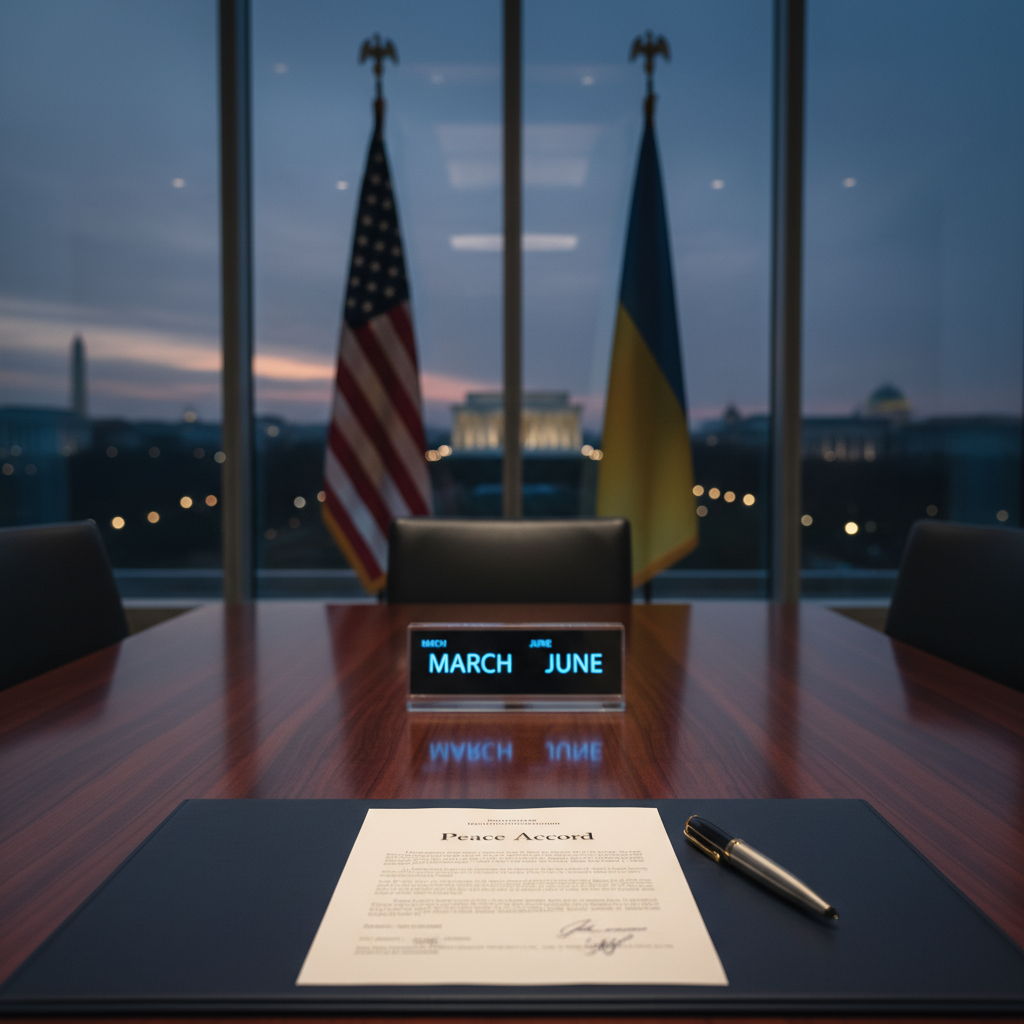
    The geopolitical landscape of Eastern Europe is currently undergoing its most significant shift since the onset of the conflict in 2022. Recent reports indicate that the Trump administration fast-tracks Ukraine peace deal negotiations, setting an aggressive timeline that aims for a ceasefire as early as March 2026 and a comprehensive resolution by June 2026.

    This diplomatic “blitz” is not merely about ending hostilities; it represents a fundamental recalibration of American foreign policy. By prioritizing a rapid conclusion to the war, the administration is attempting to fulfill high-stakes campaign promises ahead of the 2026 midterm elections. However, the speed of these developments has sparked intense debate regarding the long-term sustainability of such an accelerated agreement.

    The Strategic Blueprint: The 28-Point Plan

    The push for a resolution reached a fever pitch in early February 2026. According to reports from ABC News, the cornerstone of this effort is a comprehensive 28-point peace plan drafted by presidential envoy Steve Witkoff and Secretary of State Marco Rubio.

    This document was formally presented to Ukrainian President Volodymyr Zelensky on February 6, 2026. The plan is designed to be exhaustive, covering everything from territorial borders to future economic cooperation.

    • Territorial Cessions: The plan suggests Ukraine cede the Donbas region and other eastern territories, including some areas not currently occupied by Russian forces.
    • NATO Restrictions: The agreement stipulates that NATO will not expand further, effectively ending Ukraine’s aspirations for membership.
    • Military Limitations: Ukraine would be required to cap the size of its standing military and pledge a status of neutrality.
    • Economic Reconstruction: The plan proposes a “Ukraine Development Fund” to rebuild vital gas infrastructure and data centers.

    The June Deadline: Political and Diplomatic Risks

    The establishment of a June 2026 deadline is the most striking feature of this initiative. While traditional diplomacy often moves at a glacial pace, the administration is treating this negotiation with the urgency of a corporate merger.

    The timing is far from arbitrary. As noted by Axios, the administration’s focus is heavily influenced by the domestic political calendar. By resolving the conflict by June, the President can pivot toward the 2026 midterm elections. Zelensky himself has acknowledged this reality, stating, The elections are undoubtedly more significant for them.

    To meet this goal, a March ceasefire is being pushed. This phased approach is intended to stop the bloodshed immediately while leaving the complex legalities of territorial transfers to be settled over the subsequent ninety days, according to FOX 5 News.

    New Diplomatic Infrastructure: Miami and Beyond

    To facilitate this accelerated timeline, the administration has overhauled the traditional diplomatic framework. A significant development is the proposal to move trilateral talks to Miami, Florida. This would mark the first time these high-level negotiations occur on American soil, providing the U.S. with a distinct “home-court advantage.”

    Furthermore, to reduce the risk of accidental escalation, the U.S. and Russia have agreed to reestablish direct military communication lines. These channels are viewed as essential for maintaining the “energy infrastructure ceasefire” currently being discussed in secondary venues like Abu Dhabi.

    Geopolitical and Market Implications

    As the peace process accelerates, the ripple effects are being felt far beyond the front lines:

    1. Energy Markets: The plan explicitly mentions the reconstruction of Ukraine’s energy grid. For global energy firms, this represents a multi-billion dollar opportunity, though Russia’s continued aerial campaign remains a significant risk.
    2. Technology Hubs: The inclusion of “data centers” suggests a vision for Ukraine as a future tech hub for Eastern Europe, integrating its economy with Western standards despite military neutrality.
    3. The Future of NATO: By halting expansion, the deal alters the security architecture of the continent, causing concern in Poland and the Baltic states who view expansion as a primary deterrent.

    Challenges to a Lasting Agreement

    Despite the optimism, significant roadblocks remain. Analysts at The Soufan Center interpret Vladimir Putin’s demands for “denazification” as a push for a puppet government in Kyiv.

    The Security Guarantee Dilemma: President Zelensky remains firm that there can be no cessation of hostilities without security guarantees. While the U.S. claims an agreement is “nearly complete,” it has been reluctant to sign it until the final peace deal is ready.

    Domestic Hurdles: Any peace agreement involving territorial concessions will likely require a national referendum in Ukraine. This democratic process could take several months, making the June deadline appear highly ambitious to legal experts.

    Expert Analysis: Structural vs. Tactical

    Is this a permanent structural shift or a tactical move? The creation of the Ukraine Development Fund suggests a long-term commitment to a new, non-NATO-centric security model. Conversely, the explicit linkage to the U.S. midterm elections suggests that political optics are a primary driver.

    If the deal lacks robust enforcement, it could follow the path of previous failed agreements. However, reports suggest the framework includes a 24-hour response provision for ceasefire violations to deter future aggression.

    Practical Takeaways for Stakeholders

    • Monitor the Miami Summit: The official announcement of talks in Florida will be the point of no return.
    • Watch Referendum Language: Any shift in Zelensky’s stance on a national vote will signal the level of U.S. pressure.
    • Energy Infrastructure Tenders: Companies should prepare for the rollout of Development Fund projects.
    • Security Specifics: Look for details on what the U.S. “24-hour response” entails—military action or economic sanctions.

    Frequently Asked Questions

    What is the specific deadline for the peace deal?

    The administration is pushing for a preliminary ceasefire by March 2026, with a final, comprehensive peace treaty signed by June 2026.

    What are the main concessions required from Ukraine?

    According to the 28-point plan, Ukraine may need to cede the Donbas region, pledge military neutrality, and accept that NATO will not expand further into its territory.

    Where are the peace negotiations taking place?

    While secondary talks have occurred in Abu Dhabi, the Trump administration has proposed moving high-level trilateral negotiations to Miami, Florida.

    Will the peace deal include economic aid?

    Yes, the plan includes the creation of a “Ukraine Development Fund” and initiatives to rebuild energy infrastructure and develop fast-growing technology industries.

    Stay ahead of the curve with expert analysis and real-time updates on international policy.

    Sign Up for Our Geopolitical Insights Newsletter

  • 2026 Global Peace Trends and Feminist Peacebuilding

    2026 Global Peace Trends and Feminist Peacebuilding

    2026 Global Peace Trends: Shrinking Civic Space and Feminist Peacebuilding

    Estimated reading time: 7 minutes

    Key Takeaways:

    • Financial Crisis: G7 nations are projected to cut peacebuilding aid by 28% in 2026, marking the steepest decline since 1960.
    • State Aggression: Government entities have increasingly become the primary perpetrators of violence against their own citizens.
    • Feminist Necessity: Integrating gender analysis is no longer optional but a strategic requirement to counter the weaponization of hunger and political exclusion.
    • Civic Erosion: Systematized content suppression and anti-NGO legislation are dismantling the “enabling environment” for global civil society.

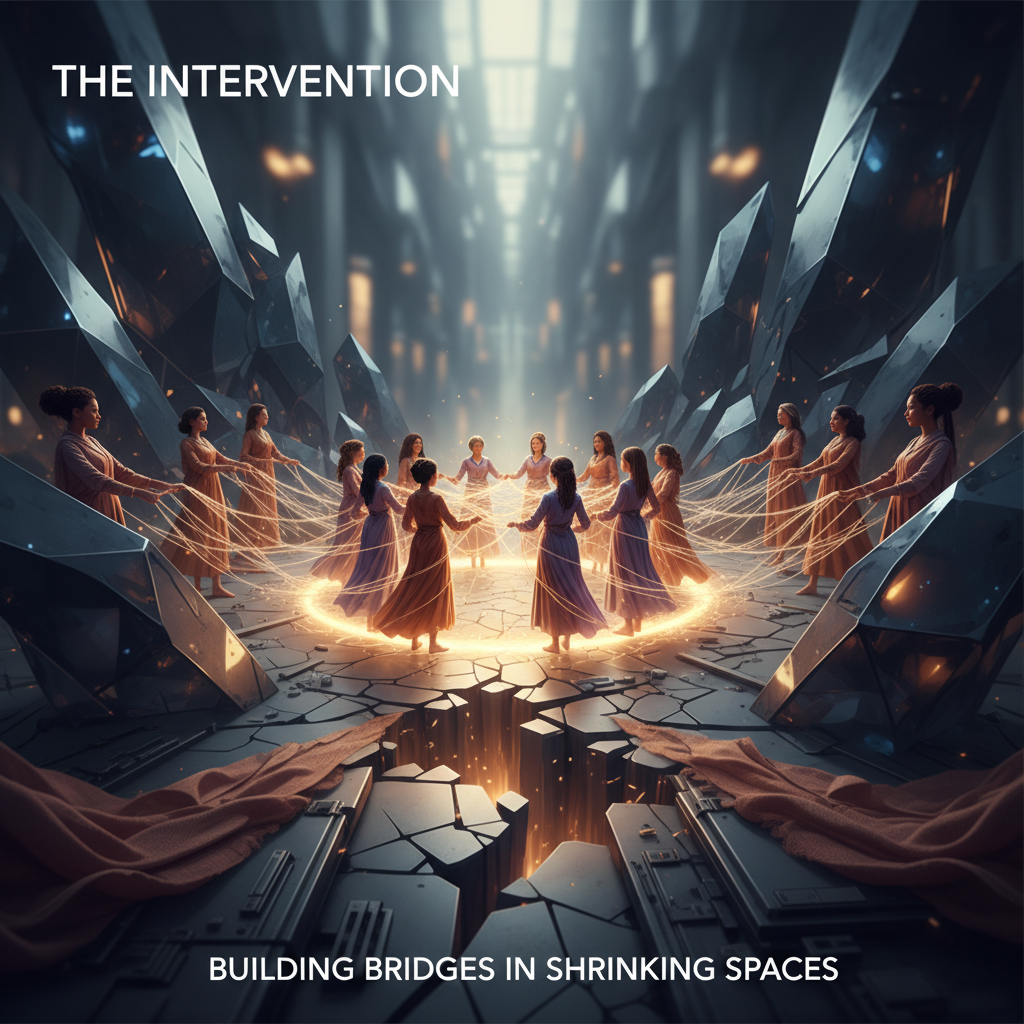
    The global landscape of 2026 is marked by a profound and unsettling paradox. While the need for conflict resolution and humanitarian intervention has reached a historic peak, the institutional and financial support systems designed to facilitate peace are being systematically dismantled. At the heart of this crisis is the emergence of 2026 Global Peace Trends: Shrinking Civic Space and Feminist Peacebuilding, a dual-pronged phenomenon where states are increasingly prioritizing militarization and transactional security over human rights and inclusive governance.

    As we navigate this complex year, the international community is witnessing a “strategic contradiction.” On one hand, global violence is escalating, driven by state-led aggression and democratic backsliding. On the other, the resources most capable of preventing future conflicts—namely, peacebuilding funds and civil society organizations—are facing an unprecedented existential threat.

    The Convergence of Conflict and Shrinking Space

    The intersection of record-high armed conflict, a collapse in democratic norms, and severe funding cuts represents a critical inflection point in global security dynamics. According to the Georgetown Institute for Women, Peace and Security (GIWPS), the intersection of shrinking civic space with gender-responsive conflict analysis has emerged as the central analytical framework for 2026. This framework reveals that women and girls are not only facing disproportionate risks during political transitions but are also being systematically excluded from the very peacebuilding efforts they often lead at the grassroots level.

    The Rise of State Violence and Institutional Failure

    One of the most concerning aspects of the 2026 landscape is the shift in the nature of violence itself. Research from ACLED (Armed Conflict Location & Event Data Project) indicates that states are increasingly becoming the primary perpetrators of violence against their own civilians.

    This trend is most visible in contexts like Russia, Israel, and Myanmar, where state-led military actions are often framed through narrow security interests. What is particularly alarming is the international community’s de-facto acceptance of this violence. As major powers prioritize transactional geopolitics, the previous focus on human-security-centered approaches is being sidelined. When state violence is normalized under the guise of “national security,” the mechanisms for international accountability begin to crumble, leaving civil society vulnerable and exposed.

    The Funding Collapse: A Crisis by Design

    The financial backbone of global stability is fracturing. The G7 countries—historically the providers of three-quarters of all official development assistance—are projected to reduce their peacebuilding and development contributions by 28% in 2026 compared to 2024. This represents the largest drop in aid since 1960.

    This collapse in funding is not merely a result of economic belt-tightening; it is a reallocation of priorities. While peacebuilding budgets are being slashed, global military expenditure rose by an astounding 9.4% in 2024. The results of this shift are already visible on the ground. A February 2025 survey highlighted by Statewatch found that:

    • 55% of NGOs have lost significant staff capacity.
    • 67% of NGOs have been forced to reduce or entirely shut down essential services.

    This capacity vacuum is occurring at the exact moment when conflict prevention is most desperately needed. As Safer World notes, peace advocates are now operating with minimal financial and political support even as violence in their home contexts reaches a breaking point.

    The Gendered Dimensions of 2026 Conflicts

    In the midst of these structural shifts, the specific vulnerabilities of women and girls are intensifying. The GIWPS 2026 analysis identifies three cross-cutting trends that are defining the experience of women in conflict zones today:

    1. The Weaponization of Hunger: In regions like Sudan, South Sudan, and Mali, hunger is no longer just a byproduct of war; it is a tactical instrument of conquest. This disproportionately affects women, who are often the last to eat and the first to experience health consequences.
    2. Repressive Political Transitions: As states undergo turbulent political shifts, women are being systematically excluded from decision-making, serving as cover for the roll-back of rights.
    3. Compounded Climate Shocks: Climate-induced displacement is hitting women-headed households the hardest, creating a cycle of perpetual physical and economic insecurity.

    These trends highlight why “Feminist Peacebuilding” is not just a niche interest—it is a strategic necessity. Without gender-inclusive efforts, the root causes of conflict remain unaddressed, leading to unstable agreements prone to collapse.

    Shrinking Civic Space and the War on Information

    Civic space—the environment that allows citizens to organize, participate, and communicate—is under a coordinated global assault. From the shutdown of free media to the introduction of anti-NGO legislation, the “enabling environment” for civil society is shrinking.

    According to Forus International, content suppression is becoming a systematized tool for governments to control the narrative. In 2026, major elections in Somalia, Uganda, Ethiopia, Morocco, Myanmar, and South Sudan are expected to be flashpoints for repression. Even in Europe, restrictions on legitimate protests indicate that democratic backsliding is a global phenomenon.

    Key Influencers and Policy Shifts

    Several organizations are leading the charge in monitoring these trends and advocating for a course correction:

    • Georgetown Institute for Women, Peace and Security (GIWPS): Their Women, Peace and Security Conflict Tracker is the gold standard for gender-responsive forecasting.
    • Parliamentarians for Global Action: They are currently pushing for the establishment of a UN Special Rapporteur on Democracy to address global democratic erosion.
    • The United Nations: Despite its critical role, the UN itself is grappling with a $2.4 billion budget shortfall in 2025, leading to significant layoffs.

    Market and Social Impact: A Sector-Wide Contraction

    The impact of these trends is felt across every sector of global development:

    • The NGO Sector: When 67% of NGOs reduce services, the safety net for millions disappears, creating a feedback loop where local grievances turn into regional conflicts.
    • Humanitarian Response: Current UN data shows that only 17% of Sustainable Development Goal (SDG) targets are on track.
    • Economic Realities: The reallocation of funds creates a “security-development gap.” Short-term security might be purchased through arms, but long-term stability is sacrificed.

    Future Outlook: A Permanent Structural Shift

    Evidence points to these trends being a permanent structural shift rather than a temporary phase of austerity:

    1. Geopolitical Realignment: The move toward “Great Power Competition” means global public goods like peacebuilding are viewed as expendable compared to military readiness.

    2. Institutional Memory Loss: Once peacebuilding organizations lose staff and funding, the expertise required to manage complex peace processes vanishes, taking decades to rebuild.

    Practical Takeaways for Advocates and Donors

    Despite the grim outlook, actionable steps can mitigate the impact of these trends:

    • Prioritize Localization: Shift away from international intermediaries and provide direct, flexible funding to local, women-led organizations.
    • Integrate Gender Analysis: Policy makers should use gendered risk assessments as early-warning indicators for regional instability.
    • Form Cross-Sector Alliances: NGOs should partner with technology companies to combat content suppression.
    • Support International Safeguards: Back the Parliamentarians for Global Action initiative for a Special Rapporteur on Democracy.

    Conclusion: The 2026 global peace landscape is at a crossroads. When we silence the voices of women and restrict the ability of citizens to organize, we remove the very buffers that prevent political disagreements from turning into bloody conflicts. The global community must recognize that there is no lasting security without human security.

    Frequently Asked Questions

    What is feminist peacebuilding?
    It is a strategic approach that addresses the root causes of conflict by ensuring women’s meaningful participation in peace processes and analyzing how gender dynamics affect security and recovery.

    Why is civic space shrinking globally in 2026?
    Civic space is shrinking due to a combination of anti-NGO legislation, systematized digital content suppression, and states prioritizing transactional military security over democratic accountability.

    How significant are the G7 funding cuts?
    The projected 28% reduction in peacebuilding and development aid is the largest drop in international assistance since 1960, signaling a major shift toward militarized budgets.

    What is the UN Special Rapporteur on Democracy initiative?
    It is a proposed international mechanism advocated by the Parliamentarians for Global Action initiative to monitor and counter the erosion of democratic norms and civic freedoms worldwide.